

James's Story.
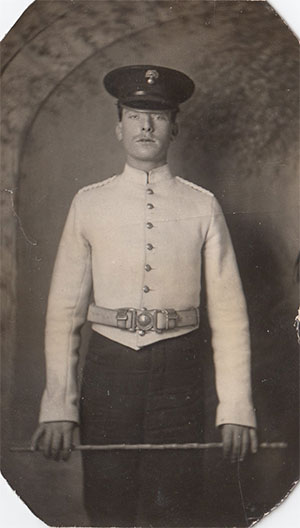
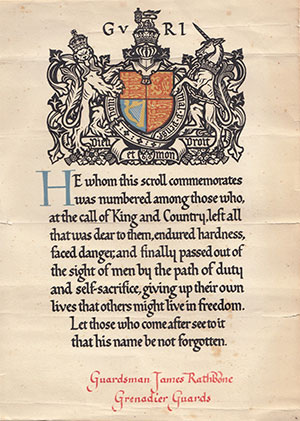
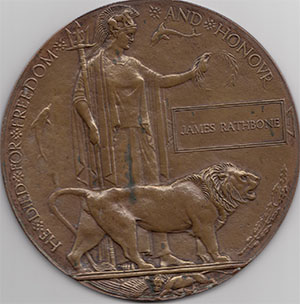
Born in Winnington, Northwich in 1891, James was one of nine children of Frederick and Fanny Rathbone of Northwich. In 1901 the family lived at 24 Hemming Street; Frederick worked as a chemical labourer at Brunner Mond. By 1911 the family lived at 3 Faraday Road, Winnington, James, age 20 was an apprentice cabinet maker. He enlisted into the 3rd battalion Grenadiers Guards in Knutsford soon after war was declared and went to France 11 August 1915, sixteen days after the full battalion had arrived.
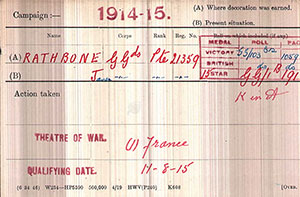
In October 1915 the battalion were involved in the fighting near to Loos and the Hohenzollern Redoubt. By March 1916 the battalion were near to Ypres. James is listed as killed in action 31 March 1916 and is one of the casualties as they passed through Potijze during the relief of the Scots Guards. The war diary for the period states.
Battalion war diary
30/31st March 1916
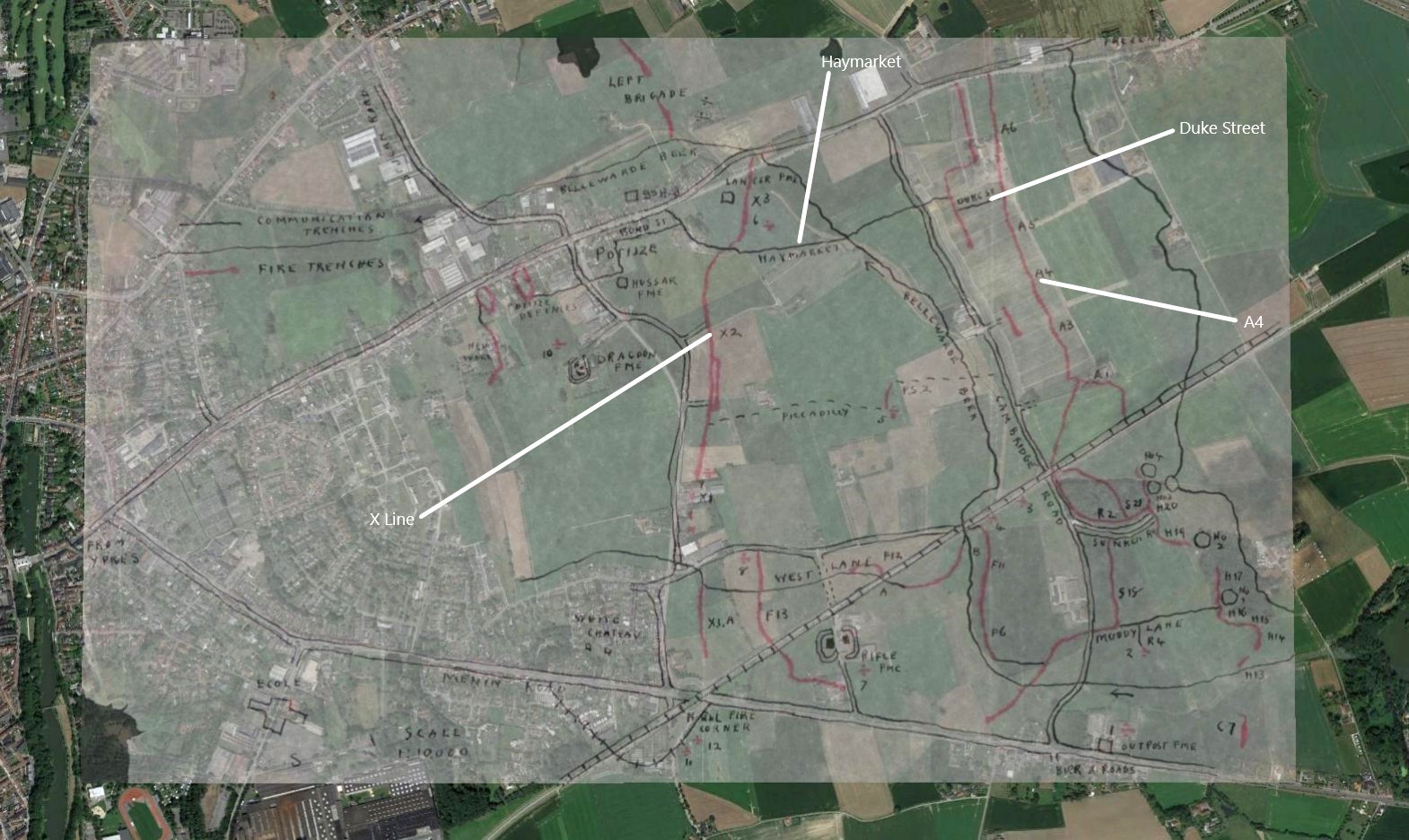
On the afternoon of the 30th we received news that the Scots Guards who we were about to relieve we're being heavily shelled. The fire however slackened about the time of the relief and it was not consequently delayed. The three leading companies got into the communication trenches (HAYMARKET) without casualties, but No. 2 came under shrapnel fire through POTIJZE and had seven casualties. The bombardment became intense at this moment on the frontline system and on the South end of the “X” line. Communication broke down from battalion headquarters to all companies and to brigade. One wire was still kept going to Artillery.
The leading two companies who were to hold from Duke street to Roulers railway found the front trenches devastated and being swept by shrapnel and H.E. fired from Pilkem and the Bellwaarde ridge. The Scots Guards had very many casualties (90 in all) communication along this front line was impossible under cover, in consequence men became cut off from their commanders many being buried and other who were not casualties covered with mud and debris. The relief was however accomplished but the shelling never slackened until 4am the following morning.
In view of the difficulty of the relief and the possibility of attack the batteries of 18 pdrs. covering our frontage were asked to open a barrage on the German front line. This was done and not lifted till daylight. At 4 am dispositions and situation were as follows. No.4. Company in the front line from Duke Street to A4 (2 platoons ) and 2 platoons in support line. No.3. Company from A4 to the right. No.2 from the road to just south of the junction of the X line and Haymarket. No.1 Company in a gap of 200 yards of the blown in trenches in the middle, dividing their left and right. The front line was wrecked, but by placing men in the wreckage and under what cover remained it was found to be defensible, and it was hoped that the Germans would attack. Men had their ammunition ready and as the distance between trenches is considerable, they would certainly have been met with heavy rifle fire.
The X line north of Haymarket was practically undamaged but south of X2 nothing was left.
The war diary states that 7 other ranks were killed, however records now show that six from the 3rd battalion died, of which four including James are buried at Potijze Burial Ground.