


Royston's Story.
Able Seaman Royston Prince
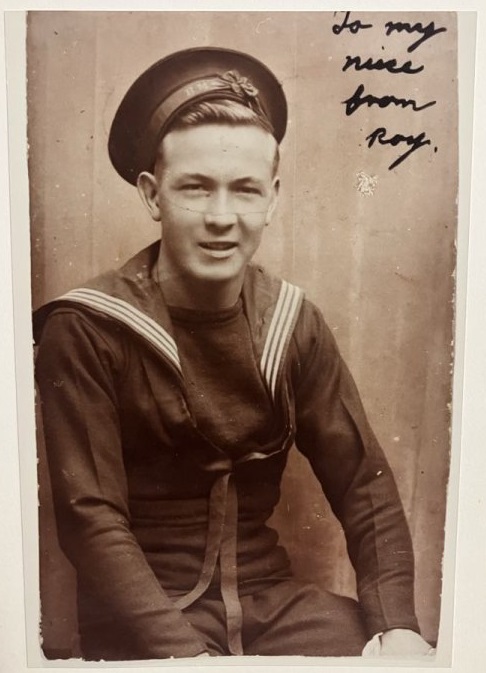
Photo of Royston kindly provided by his great niece Mary
Royston served on the RMS Laconia
RMS Laconia was an ocean liner owned by Cunard Line. She was requisitioned by the War Department at the beginning of the war for military use and was initially converted into an armed merchant cruiser then later converted into a troop ship equipped with defensive armaments ( DEMS Defensively Equipped Merchant Ship) Royston served as a DEMS Gunner on the ship.
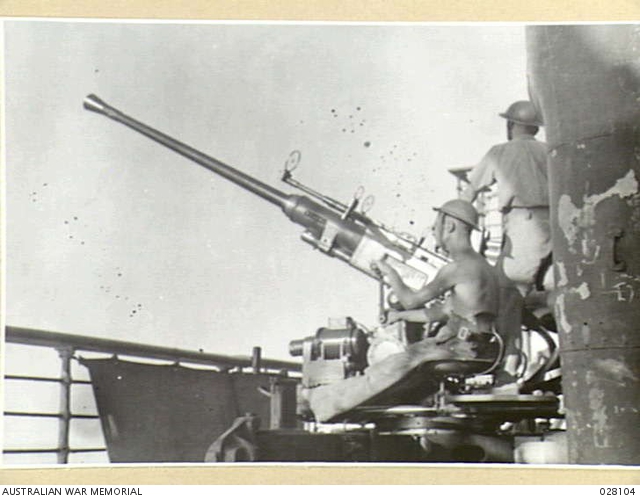
DEMS Gunners on the RMS Laconia
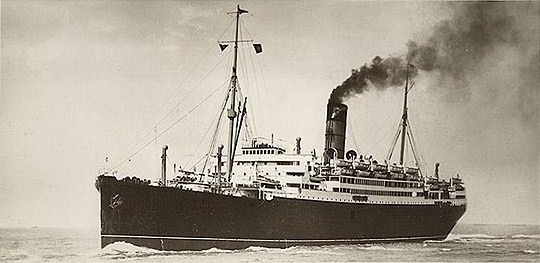
RMS Laconia
On 12 September 1942, at 8:10 pm, 130 miles (210 km) north-northeast of Ascension Island, Laconia was traveling from South Africa to Plymouth when it was hit on the starboard side by a torpedo fired by U-boat U-156. There was an explosion in the hold and many of the Italian prisoners aboard were killed instantly. The vessel immediately took a list to starboard and settled heavily by the bow. Captain Rudolph Sharp, who had also commanded another Cunard liner, RMS Lancastria when she was sunk by enemy action, was gaining control over the situation when a second torpedo hit Number Two hold. At the time of the attack, the Laconia was carrying 268 British personnel (including many women and nurses), 160 Polish soldiers (who were guarding the POWs), more than 80 civilians, and roughly 1,800 Italian prisoners of war who had been captured in North Africa
Captain Sharp ordered the ship abandoned and the women, children and injured taken into the lifeboats first. By this time, the ship's forecastle was awash. Some of the 32 lifeboats had been destroyed by the explosions. According to Italian survivors, many of the POWs were left locked in the holds, and some of those who escaped and tried to board lifeboats and liferafts were shot or bayoneted by their Polish captors. While most British and Polish troops and crew survived, only 415 Italians were rescued, out of 1,809 who had been on board.
At 9:11 pm Laconia sank, bow first, her stern rising to be vertical, with Sharp himself and many of the Italian prisoners still on board. The prospects for those who escaped the ship were only slightly better; sharks were common in the area and the lifeboats were adrift in the mid-Atlantic with little hope of rescue.
When Kapitänleutnant Werner Hartenstein, commanding officer of U-156, realized civilians and prisoners of war were on board, he surfaced to rescue survivors, and asked the Befehlshaber der U-Boote (U-boat Command in Germany) for help. Several U-boats were dispatched; all flew Red Cross flags, and signalled by radio that a rescue operation was underway. On Sept 15, at 1130 hours U-506 under Kptlt Erich Würdemann arrived at the scene and continued to rescue the survivors. A few hours later U-507 under Korvkpt. Harro Schacht and the Italian submarine Cappellini also arrived. The boats headed for shore, towing the lifeboats behind them and hundreds of survivors were both in and inside the U-boats themselves.
Survivors on U 156
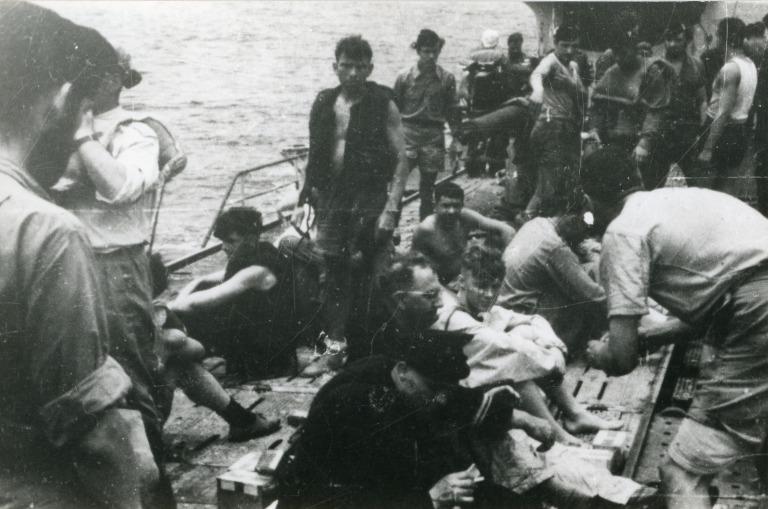
Survivors on the deck of U156
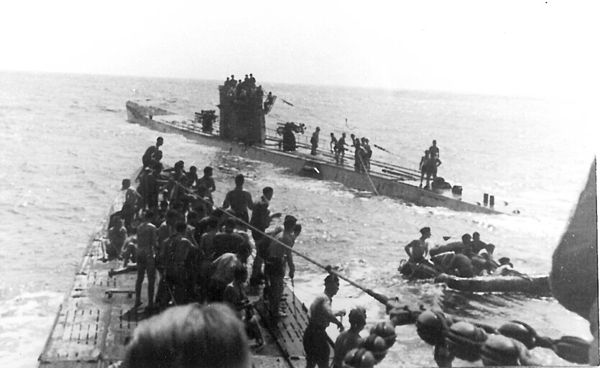
U 506 and U 156 collect survivors
On 16th September a USAAF B-24 Liberator plane sighted the rescue efforts.Hartenstein signaled the pilot for assistance, who then notified the American base on Ascension Island of the situation. Captain Robert C. Richardson III, who later claimed to have been unaware of the Germans' radio message, ordered that the U-boats be attacked. Despite the Liberator crew clearly seeing the Red Cross flags, they pressed home their attack. The survivors were crowded on the submarines' decks and the towed lifeboats, as the B-24 made several deadly attack runs on U-156. At least 2 lifeboats full of survivors were hit by bombs dropped by the B24. The Germans ordered their submarines to dive, abandoning many survivors. Vichy French ships rescued 1,083 persons from the lifeboats and took aboard those who had been picked up by the four submarines then left in the sea when the submarines dived , and in all around 1,500 survived the sinking. Other sources state that only 1,083 survived and an estimated 1,658 persons died (98 crew members ( including Royston Prince) , 133 passengers, 33 Polish guards and 1,394 Italian prisoners), though some estimates agree that the death toll was as high as 1,757. More people lost their lives on the Laconia than on the Titanic.
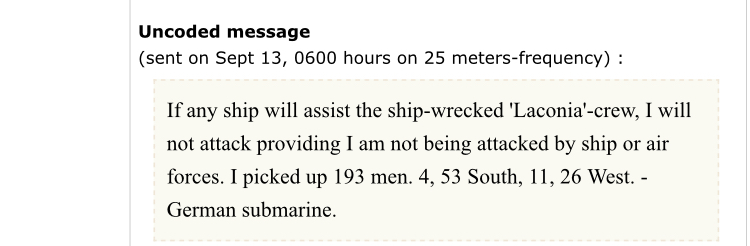
Radio message sent by U 156
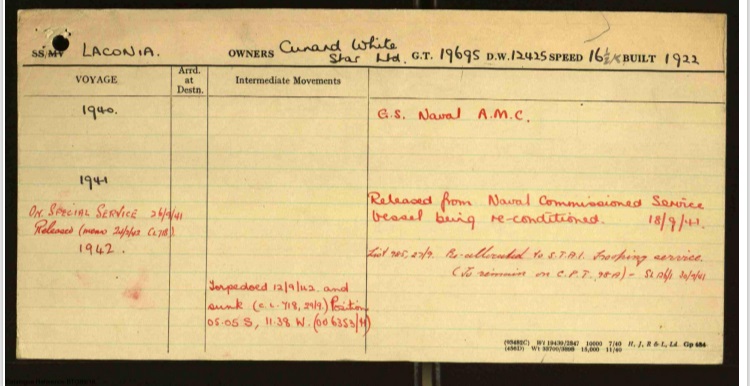
Movement card for Laconia showing her loss
Royston’s date of death is recorded as 15th September 1942 which is 3 days after the Laconia sank so it seems likely that he survived the sinking and died in the sea, died of wounds or was recovered by the U boats and died after the B24 attacked on the 16th. We will never know the exact details.
After the incident, Admiral Karl Dönitz issued the Laconia Order, henceforth ordering his commanders not to rescue survivors after attacks.
Footnote
The B-24 pilots mistakenly reported they had sunk U-156, and were awarded medals for bravery. Neither the US pilots nor their commander were punished or investigated, and the matter was quietly forgotten by the US military. During the later Nuremberg Trials, a prosecutor attempted to cite the Laconia Order as proof of war crimes by Dönitz and his submariners. The ploy backfired, causing much embarrassment to the United States after the incident's full report had emerged to the public and the reason for the "Laconia order" was known.
Royston is commemorated on the Royal Navy Memorial at Plymouth
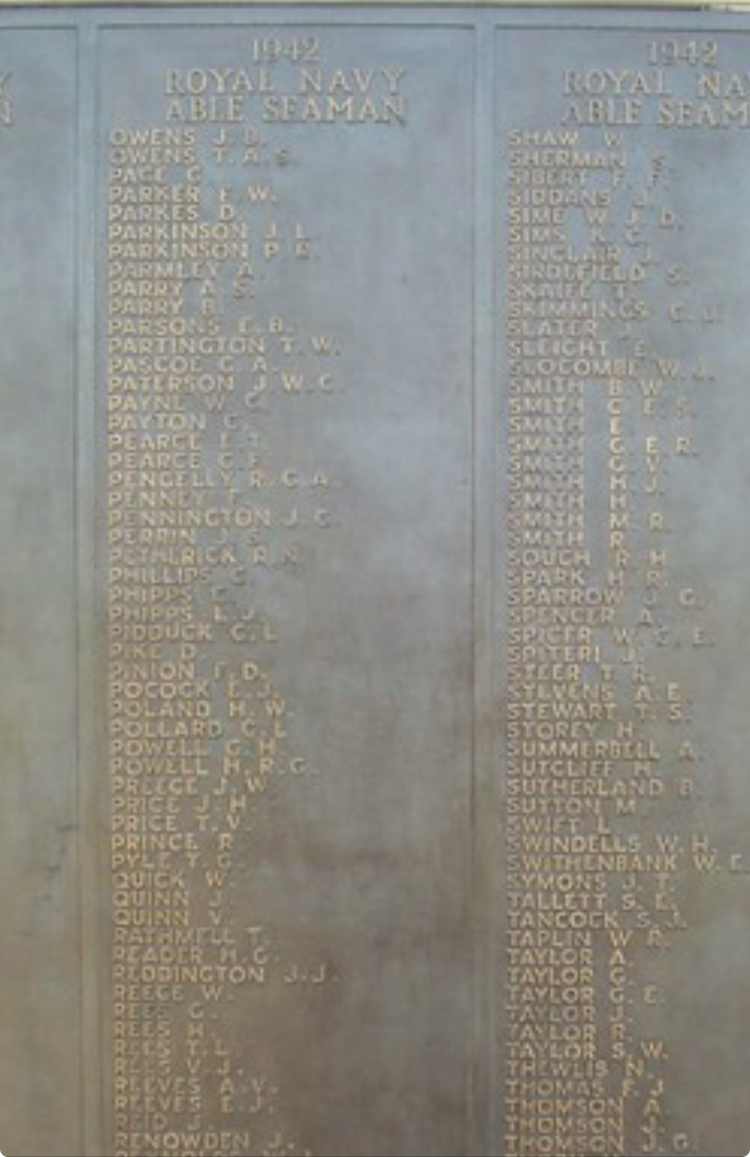
Plymouth Memorial